BBC Correspondent/ Videojournalist in Argyll, Scotland and Internationally. (Minority) Language Expert/ Languages: 🇩🇪🇬🇧🏴🇪🇸🇫🇷🇮🇹🇷🇺🇵🇹🇮🇪🇸🇪🇨🇳🇻🇦/ Fear-naidheachd, Fear-camara, Fear-cànain/ Deutscher Journalist, Kameramann und Sprachenexperte in Schottland
There is a revolution going on in journalism. That’s not really new. But will journalists be surplus to requirement in the future? Associated Press is already using algorithms to publish automated stories about developments on Wall Street. Yet, Prof Ramon Salaverría from the University of Navarra in his keynote speech at the 3rd International Conference on Journalism and Mobile Devices in Portugal explained why he doesn’t think so.
University Beira Interior, Colvilhã, Portugal
I asked him specifically about the future of documentaries in which I take an interest. He gave the example of the textile industry. When machines were first brought in during the time of industrialisation many workers lost their jobs. Some thought that by destroying the machines they could fight the change. Time proved them wrong. But today many more people work in the textile industry than back in the days of manual labour.
The same must be true for journalism. There is no point in resisting the introduction of Twitter and even Facebook or as another speaker outlined Whatsapp as a means of sharing information. Prof Salaverría is not worried about the future of quality in journalism, but admits journalism will change drastically.
For somebody like me with a slightly technophobic tendency this didn’t seem very credible. But that’s what we were told at the start of today’s session in how to create your own app using MIT app inventor. It is designed for people who want to develop apps without the need to learn a programming language. Our tutor Prof Eduardo Pellanda from the Pontifical Catholic University of Rio Grande do Sul in Brazil made it sound so easy in today’s workshop at Beira’s Interior University in Portugal. This is their third Conference on Journalism and Mobile Devices. I am attending on behalf of XpoNorth, Scotland’s leading creative industries festival.
Der britische Premierminister David Cameron hatte vor den letzten Wahlen ein Referendum zur Mitgliedschaft seines Landes in der EU versprochen. Insbesondere in seiner konservativen Partei drängten viele darauf. Übermorgen ist es nun soweit: die Briten stimmen ab. In den letzten Wochen standen die Zahlen der Austrittsbefürworter und –gegner dabei Kopf an Kopf. Das Land scheint gespalten.
Blick auf Hummerkörbe auf der Isle of Luing in der Nähe von Oban (Schottland)
John McAlistair hat mehrere Fischerboote in Oban, einer Kleinstadt an der schottischen Westküste. Wie viele Fischer ist er der Meinung, dass die EU mit ihren Fangquoten den Niedergang der Fischerei in Großbritannien verursacht hat. Er wird für den Austritt stimmen.
Premierminister Cameron hingegen wies kürzlich darauf hin, dass in den letzten fünf Jahren 20% mehr Fisch in Großbritannien angelandet wurde, und der Wert der Fischerei gestiegen sei. In der Tat wurde die Quote erst im Dezember letzten Jahres wieder erhöht. Continue reading “Grossbritannien ist gespalten über die Frage: Sein oder nicht sein – in der EU?”→
Taxi to Hua Lamphong Station, BangkokLast meal in Bangkok looking at Hua Lamphong Station
Bangkok to Singapore is regarded as one of those iconic railway journeys. On The Eastern and Oriental Express – a luxury train – the trip costs £1640. So it’s not for everyone. But what about the normal train – the one the locals take? Train – locals – Asia: my friends tell me I must be mad; they have pictures in their heads of trains where people are holding onto the rooftop. But as travel guru, Simon Calder says: The cheaper you travel, the closer you get to the soul of a place. Bangkok to Singapore can be done for around £40 or $55 according to seat61.
I had previously taken the train from Bangkok to the Cambodian border. It was a bit closer to that image my friends had in their minds, rattling along at around 30 mph. We stop in random places that don’t even have a station. Yet, people get on and off – some selling local delicacies. I have mango and sticky rice, a popular Thai desert. Despite the fact that all windows are open even the conductor is so hot he takes off his shirt along the way. My clothes are ruined from the dirt coming in through the windows. But everyone has a seat, albeit a bit squashed. We arrive exhausted and then have to go through the Cambodian border, an ordeal in itself which is not very unlike crossing the iron curtain in my home town Berlin in the 1980ies.
King and Queen on large posters, watching over passengers at Hua Lamphong StationOur friendly conductor on the Bangkok to Butterworth sleeper
With all that in mind I make sure to be well rested before I board the train for Singapore. “Sawatdee crap,” I salute the conductor waiting outside my carriage. The second word isn’t an insult in Thailand, but an expression of politeness. Every other sentence finishes in “crap.” He welcomes me in English, but with a Thai smile. The train leaves on time and the seats are comfortable. There is only one seat on either side of the aisle. It turns out the guy opposite me doesn’t speak English so I decide to look out of the window. We pass shacks that are built so close to the railway I keep thinking we’ll hit them. But then huge building sites of what appears to become a new motorway are a sign of Thailand’s economic development. I admire the Buddhist spirit houses even on the building sites.
Bamboo train, Battambang, Cambodia
My spirit wanders back to Cambodia. The Khmer Rouge wanted to return the place into a country of peasant farmers in the course of which around ¼ of the population died. Although it now is a relatively stable democracy it is unsurprisingly still far less developed. Battambang, Cambodia’s second city, still doesn’t have a single set of traffic lights. On a stretch of the disused railway between the Thai border and Phnom Penh the Bamboo Train keeps attracting tourists. We sit on a platform made of Bamboo with only one wooden pole to hold onto while a little engine races us along. The bumps and shakes keep getting bigger and I say my last prayers.
Rice field in Thailand as seen from the International Express
En route to Singapore the “International Express” from Bangkok to Butterworth in Malaysia couldn’t be more different. The train is clean, it is air-conditioned and a friendly attendant shows me the English language dinner menu. I fully expected it to be a reservation for the dining car and am slightly disappointed when he serves me the three course meal at my seat. During a journey of almost 24 hours a little walk to the restaurant would have been a welcome distraction. While we drive past rice fields and palm trees I eat a spicy green curry and decide to go to the restaurant car for breakfast.
My berth
Night falls at around 7pm and the conductor comes to make our beds. Two facing seats become one bed and the upper berth is lowered down. The friendly gentleman across the aisle tells me to take my valuables into bed with me. I say “good night” and draw the curtain and at 9pm I am sound asleep. The advantage in the lower berth is not only that there is more space, but that it has a window. I wake up at five o’clock to admire the sunrise.
I am confused when the conductor climbs out of the upper berth. The passenger above me must have got off during the night and he took his place I conclude. I venture to the restaurant car. Even after three weeks in South East Asia I didn’t manage to get used to the local choice of breakfast, which to me doesn’t seem much different to lunch and dinner. So I order an English breakfast: bad choice! It reminds me of: “When in Rome do as the Romans do!”
Crossing a river in Southern Thailand
I had heard about an Islamist insurgency in Southern Thailand, but people who know the area told me it was safe to travel on the “International Express.” In my guide book I now read that the Bangkok to Butterworth train is “off limits.” Reassuringly I am not the only European on the train. The gentleman across the aisle tells me that he is from Hat Yai, an important southern city, which we are about to reach. He is going home for a few days. I ask him whether I should be worried. There is an increased presence of security personnel on the train. But he says the military government of Thailand have arrested the leaders of the insurgency and that it is now safe.
Fellow passengers from Southern Thailand
In Hat Yai a Muslim family takes the seats near me. They are quite communicative and so I ask them where they are from. A young girl with a headscarf mentions a place and adds: “Where the bombs are!” She smiles. We make it to the Malaysian border and I am slightly relieved. Another European traveller jokes that now is the time to dispose of your drugs and I suddenly think I should have checked that nobody hid any in my bag. But it’s too late now and I am pleasantly surprised by the welcome we get at the Malaysian customs.
Approaching Georgetown, Penang Island
Again, we enter another era: In Malaysia the train suddenly runs twice as fast and very smoothly. The country seems much more developed than Thailand. Housing schemes that could well be in a middle class area in Britain are now passing on the other side of the window. We are supposed to be in Butterworth at 1pm and arrive around one hour late. I decide to take a little break from the train and catch a ferry over to Penang Island.
Not New Orleans, but Georgetown, Penang
Georgetown used to be an important British hub in South East Asia before Singapore took its place. I take a rickshaw around the town and must have caught the slowest driver ever, but he compensates by putting on deafening music. The colonial past is still apparent in buildings and place names. I admire the streetart on the walls of some of the houses. It has a very pleasant, laid back and multi-cultural atmosphere: Malays only account for around 40% of the population with the Chinese being equally strong. Then there is a large Indian minority. They have all brought their own food and Penang is known for its culinary variety.
Chinese floating villages or clan jetties: Georgetown
But it’s time to move on. I catch the train again in Butterworth. The line to Kuala Lumpur has just been upgraded and electrified. We cruise at around 100 mph on a train that could well run in the UK. I make my way to the restaurant car and am a bit disappointed: There is only a choice of four microwave dishes. The friendly service compensates and the food turns out to be tasty. We arrive in Kuala Lumpur or KL bang on time four hours later.
The new Butterworth to Kuala Lumpur train
The taxi driver tells me it’s been a busy day with demonstrations against the Prime Minister of Malaysia, who is accused of corruption. It’s night time and I meet up with a bunch of locals. Together we hit the Golden Triangle, the main party district. It could be anywhere in Europe or the US. The next morning I wonder around the main sights slightly hungover. I find it a very pleasant city and begin to understand why Malaysia is a destination of choice for refugees like the Rohingya from Burma. In the evening I am invited to an end-of-Ramadan party. Thankfully there is no alcohol here, but plenty of very tasty food and fireworks. I must be the only non-Muslim there and am generally pleased about the tolerance towards other religions in Malaysia. Although it is a Muslim country I see more Anglican churches as well as Hindu, Confucian and Buddhist temples. But I’m told inter-marriage is not possible under Malaysian law.
Durian fruit (front)
Back on the train at 8am I am now headed for Singapore. As the day progresses the train slows down again and we end up rattling along at around 20mph. The lady next to me asks whether I have tried Durian – that fruit you either love or hate. In many places it is forbidden on public transport because of its smell – “Yes I have.” She is pleased.
The train terminates at Johor Bahru on the border with Singapore. We have to catch another train which only takes us over the bridge into the city state. I am thinking I have gradually worked my way up from Cambodia having reached the furthest developed South East Asian country. Yet, this is the first time my luggage is screened and searched. I have to give them credit for being courteous, but am still slightly annoyed about the fuss.
And then the train journey is over in a very unspectacular manner. I have to take a bus to connect with the Singapore subway. After a long winding disagreement over formalities between Singapore and Malaysia, who owned the railway, the remainder of the track right into the heart of the city was closed down to make way for economic development. Sadly the beautiful art-deco Tanjong Pagar station will see no trains anymore. While Singapore has been so successful in offering connectivity in air travel this doesn’t seem to apply to trains. I wonder if they will regret it when Malaysia completes its railway upgrade to Johor Bahru. It certainly cuts short the epic Bangkok to Singapore train ride.
Quatro-lingual Singapore
Singapore is an unusual place. It appears to be a Chinese city where people speak British English, located near the equator. Indeed around 3 in 4 people are ethnic Chinese, 16% are Malay and 9% are Indian. Most signs and announcements are in English, Mandarin, Malay and Tamil. After my not so smooth entry I find the Singaporeans generally friendly and helpful. A cocktail in the rooftop bar of a hotel overlooking the bay soon helps me to chill.
Chilling in a rooftop bar in SingaporeSingapore students writing “Marry me” into the air
Watching old movies I never knew whether to laugh or cry when German soldiers appeared speaking English even amongst each other. Was the viewer deemed to dumb to realise that this doesn’t make any sense? A film almost entirely in German on UK tv was a big step when Deutschland 83 started, but having it introduced in (some kind of) German is really sensational. Herzlichen Glückwunsch! Let’s hope it’ll make German more popular again in the UK.
Je suis Paris – I am Paris, a common slogan expressing solidarity with the victims
Despite being used to horrible news I felt the Paris attacks affected me personally. I was in London at the time and Paris was only a couple of hours away on the train. They way the terrorists shot indiscriminately at people sitting outside in restaurants sent a clear message: Be afraid wherever you are! As a journalist I went to Paris.
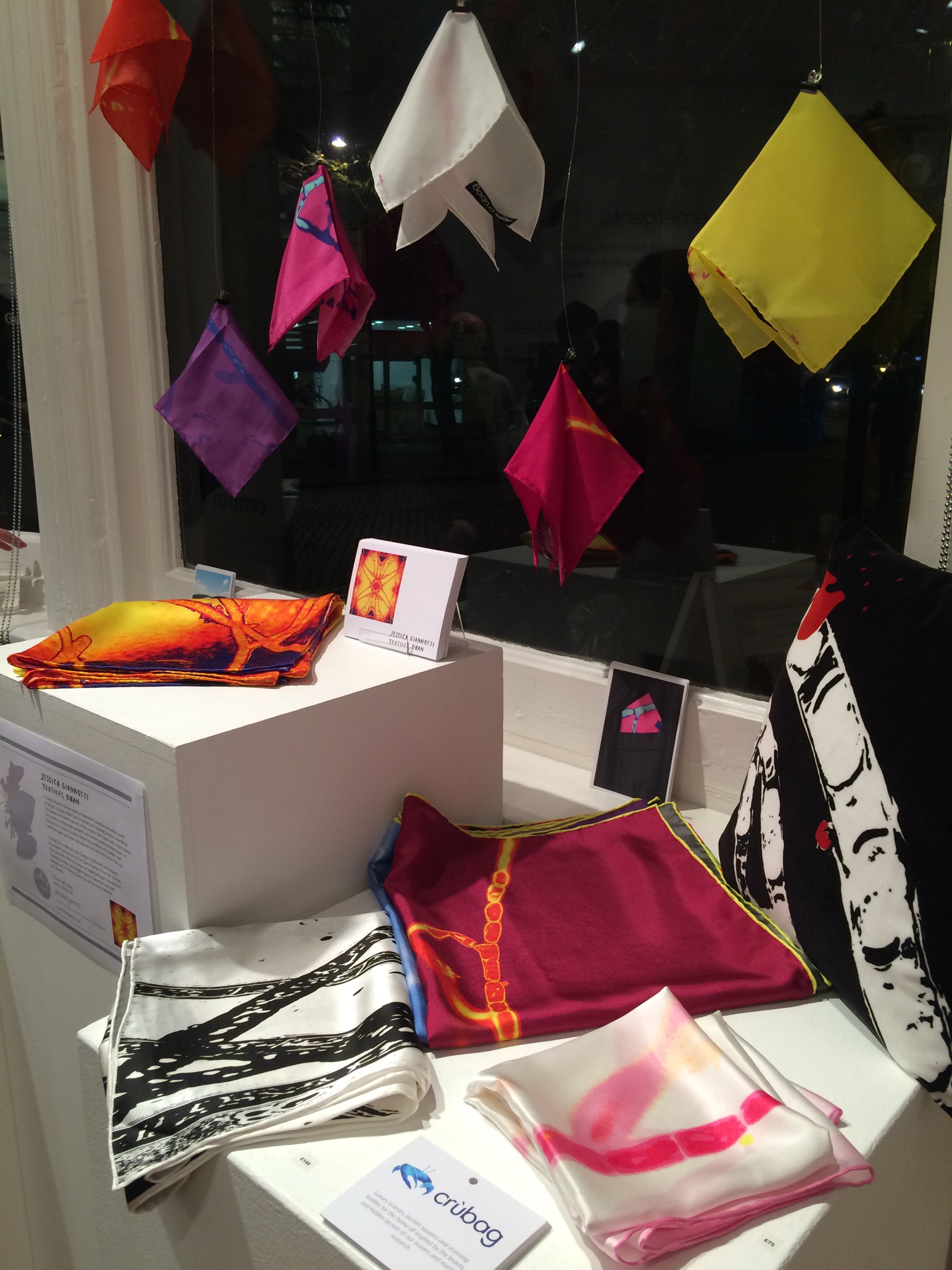
Beautiful Highland designed produce is on display at Craft Central in London this week. One of the stars of the show is Argyll based Crùbag. They show the beauty of patterns from the sea on textiles.
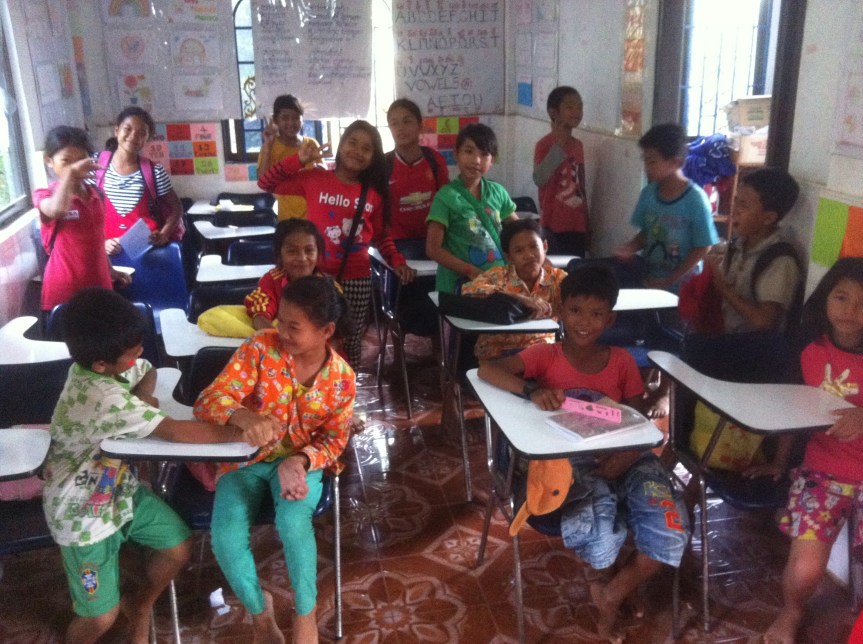
Some analysts argue that development aid isn’t working and should be stopped. Small community based projects definitely do work though as I found out while volunteering in Cambodia.
Thanks very much to the recent anonymous donor to my indiegogo campaign! Your £25 are really appreciated. If you’d like me to send you the DVD and postcard, please let me know your details. Everyone else please go and check out the perks including a Cambodian postcard (might be posted from UK) and a Cambodian gift. The countdown is on with only 4 days left until the campaign closes: http://igg.me/at/cambodiafilm.
On Wednesday our group of volunteers will be getting a crash course at Edinburgh Napier University in how to teach English. The uni’s marketing department have said they are interested in contributing to my fundraising campaign as well. Really excited about that.
Otherwise preparations are going well with my first round of vaccinations done and the second one due on Tuesday. Spent £189 in the drugstore the other day. A new passport is hopefully on its way after I managed to convince the German authorities that I wasn’t living in Germany anymore. Not even 6 weeks to go until we take off!!!